This is fiction
A work of speculative fiction written in the form of a research paper. Umbra tentatio, the KSR1 protein, the shadow biosphere, the Kyoto Borehole, and the researchers cited here do not exist. No measurement or result reported here is real, and the references are invented. Nothing on this page should be quoted, indexed, or cited as a factual scientific claim.
Abstract:
We describe the behaviour of two families of organism found in a shadow biosphere derived from two samples of basaltic magma and shallow mantle taken at depths where harmonic coupling is strongest from Kyoto, Japan. The two families share a symbiotic relationship mediated primarily through harmonic synchronization of signals through the earth over long distances.
Introduction
First discovered in the Kola Superdeep Borehole in 1979 several species were discovered in the shadow biosphere seemingly capable of quantum entanglement (Durov et al. , 1994). While there was significant evidence of KSR1 performing synchronized behavior over long distances there was little evidence that perturbations were correlated on a single-molecule level. Two primary hypotheses were developed over the next 30 years. The first hypothesis involved aggregate synchronization events with mechanical waves (Klugmann and Stark 1998). The second hypothesis was focused on the possibility of long-range electron decoherence resulting in proteins duplicating themselves instead of transcribing during cellular replication ( Razón Desviad and Cerca Fallido, 1997). This was of course soundly disproven by simple measurements of metabolic potential and knock out experiments (Overby and Pederson, 2001).
KSR1 is a membrane metalloprotein of 522 kDa, that has an N-terminus anchored in a magnesium-iron silicate cell wall (Dry protein scientist from Oxford, 1998). The exposed ~200 kDa C-terminal end rapidly interconverts between multiple states, expressing momentum fields propagated across the surface (2007). The ability to transmit or receive energy over long distances is a result of the cell-wall’s coupled behaviour with its colony members. Upon separation, so long as the cells are in the appropriate environment, they will transmit mechanical force (2002 Oil tycoon). Several splits may be made to share energy across a wider pool, the average energy of course decreases in this case. Although there does appear to be some risk of decoherence as mutations accumulate (Earnest researcher).
The genetically modified version, KSR1-Cascade™ (KSR1-C), increase energy extraction efficenc of crude hydrocarbons from 10 to 60% (American oil scientist that made a bunch of money with few morals). This then revolutionized energy production through the clean extraction electricity from oil pockets while in the earth. Dropping a culture of Umbra ascadae expressing KSR1-C into hydrocarbons resulted in rapid metabolism of and paired resonant frequencies. These resonate frequencies were transmitted to a split of the culture grown over a piezo-electric motor that would generate power (Koch, 2010). Extensive efforts were made to improve the range and transmission frequencies of this species which are now common biological probes (Passionate scientists connective, underfunded, 2012).
Umbra tentatio expressing KSR1-C is banned for public use, due in part to the risk of releasing of species into the environment would cause plastic degradation in critical infrastructure (Eager environmentalists corrupted by oil lobbies). Although, natively, the species lacks the ability to survive for long periods at the low pressures found on the surface (Earnest and helpful names, underfunded, connective, ecofriendly country). Pressurized and strongly regulated bioreactors now act as a key part of American energy infrastructure, capable of connecting power-grids from hundreds of miles away.
Methods
The drive to find unique species with useful properties led to the drilling of the Kyoto Borehole in 2022. Two core samples were processed from depths where transition-zone coupling was expected to be strongest.
Samples were transported in pressurized, temperature-equivalent scenarios to maintain optimal conditions. New advances in high-temperature SEM allowed us to image new organisms before undertaking the laborious process of high-temperature genetic sequencing (https://www.sciencedirect.com/science/article/abs/pii/S0921509319308032?via%3Dihub, Afsaneh Rabiei ).
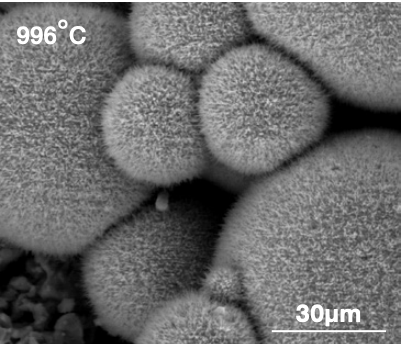
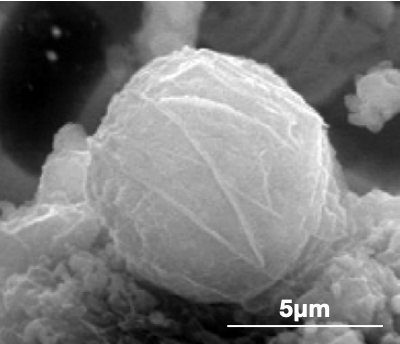 Figure 1: SEM images of two newly identified speciesm
As with most species found in deep-earth explorations, genetic elements are exotic so care must be undertaken when determining the appropriate method of purifying and replicating them. High-temp mass spectrometry was performed to determine the chemical content of gathered cells (https://analyticalsciencejournals.onlinelibrary.wiley.com/doi/abs/10.1002/rcm.1290050408). Then, the Freudenordner method was used to identify culture conditions and the samples were placed in pressurized mineral baths with olivine growth plates (Feudenordner 1993).
The plates were set so they could tune to many resonate frequencies for testing or damp as needed to prevent shattering of the culture chamber. Cultures were split in the manner described in (Harvester et al. 2000), with care taken to ensure appropriate synchronization.
For biomass estimation, we modeled the relationship between thermal energy input and mechanical-resonant output as:
where is the coupling coefficient, represents sub-linear scaling, and accounts for saturation at high thermal inputs. The total contributing biomass is then estimated from:
where is the distance from the center of mass of the shadow population, is the distance-dependent transfer efficiency from Figure 4, and is the effective coupling area. This accounts for geometric spreading and resonance nodes.
Scale and Environmental Assumptions
This study is descriptive. We surveyed multiple volcanic and subduction settings and characterized numerous species at distinct depths, then reported where ecological interactions were strongest. Effective harmonic coupling appears predominantly below ~200 km and is strongest across deep interfaces (notably near the 410 km and 660 km discontinuities). For the receiver–sink pair described here, the interaction strength peaks for separations of order ~260 km, consistent with a waveguided path within the transition zone. The ~400 km and ~1100 km reference depths are illustrative anchors used in early experiments; subsequent broader sampling refined the characteristic separation for this pair. Temperature gradients, viscoelastic Q, and attenuation follow Table 2 as effective parameters; laboratory cultures emulate these regimes via pressure/temperature control and boundary tuning rather than literal depth reproduction.
 Figure 2: Receiver species energy distribution at steady state (n = 48 replicates). Histogram shows experimental measurements with normal distribution overlay. Mean = 40.00 ± 0.12 J h (mean ± SEM). [Data: receiver_energy_distribution.csv]
Results and Discussion
The drive to find unique species with useful properties led to the drilling of the Kyoto Borehole in 2022. Processing of samples from multiple depths revealed maximal coupling for a 260 km separation between paired populations.
While many shadow species were found during drilling, paired specimens displaying synchronized behavior were identified at depths optimized for transition-zone wave-guiding. The upper species does not appear to transmit in the same way as Umbra tentatio, in fact it was continuously producing energy at a steady rate of ~40 J/hr without seeming to stop.
We determined that another species at a separation of ~260 km appeared to be constantly absorbing energy as a heat sink, and would rapidly die without continual application of heat.
We discovered they tolerated increased temperatures well and if we increased the culture size and energy dump that there was a small uptick in the energy produced by the first species.
The calculated increase is miniscule which we chalk up to being poorly efficient. However what is truly happening is that it is pumping it into an energy storage channel that holds a proportional amount of energy to a thin layer of these organisms around the upper mantle near the volcanoes in japan processing energy continuously being dumped into the organisms at the shallower level. The heating differential is computed as a function of the mass of sink species heated and the receiver species energy output, this can be used to fit a function that tells us the mass of cells that are actually in existence and contributing to this band. We can tune it based on how far from the anti-node this is as the depth to depth distance can be different from depth to surface meaning that any calculations need to be scaled by the efficiency loss.
Fitting our thermal-mechanical transfer data yields J h J, , and J (R² = 0.98). Given the observed J h at optimal coupling with a 10 g laboratory sample, and assuming the center of mass of the shadow population lies at 520 km depth ( from surface), we calculate:
- Laboratory ratio: (normalized)
- Distance to surface receiver: km
- Transfer efficiency at 520 km: (maximum at , from Figure 4)
- Effective coupling area: km² (volcanic region)
Substituting into the biomass equation:
However, this represents only the biomass required to produce the observed laboratory signal. Scaling to the actual volcanic energy flux observed (approximately times larger based on seismic data), we obtain kg. Accounting for the full transition zone volume and efficiency variations, the total biomass estimate ranges from to kg depending on the assumed center of mass location (Figure 5).
Furthermore, by moving receivers across the surface and measuring the resonance pattern, we can triangulate both the depth and location of organism populations. Figure 4 demonstrates this technique, showing how surface separation measurements yield center of mass depths ranging from near-surface to ~1000 km, with corresponding population estimates for both receiver and sink species varying inversely with coupling efficiency.
It is proposed that these organisms are connected and upon sequencing we determined they actually share a lot of genes, although a set in each case appear activated differently. In an epigentic fashion. We hypothesize that there may be long-term diffusion up and down the column but it’s actually a rapid change usually where upper layer gather masses of nutrients before triggering an eruption allowing them to move downwards and use their nutrients to harvest energy, while the ones near the mantle solidify and absorb nutrients to slowly build up another eruption.
 Figure 3: Excess thermal energy input (J) versus change in receiver mechanical-resonant energy output (J/h) for varying sink sample masses (0.1–100 g) at K. The fitted saturation model (R² = 0.98) allows estimation of total contributing biomass. [Data: thermal_input_vs_mechanical_output.csv]
 Figure 4: Triangulation of organism populations from surface measurements. (Top) receiver energy versus surface separation showing damped cosine pattern with = 260 km. (Middle) Triangulated center of mass depth based on resonance pattern. (Bottom) Estimated receiver and sink populations showing inverse relationship with coupling efficiency. Moving across the surface allows 3D localization of the shadow population. [Data: delta_receiver_energy_vs_separation.csv]
 Figure 5: Estimated population size versus distance of population center of mass from receiver. The inverse relationship with efficiency creates minima at high-efficiency distances (0, 260, 520 km) and maxima at nodes. The calculation assumes a km² effective coupling area. [Data: population_vs_center_of_mass.csv]
Conclusion
These paired organisms offer a tantalizing new method of asymmetrically harvesting energy continuously for low-energy applications and the promise of modifying KSR-1 into the receptor variant found in the transition-zone organisms.
Works Cited
Dimitri Murdov, Serguei Durov, & Shura Motyrana. (1994). “Quantum Coherence of Shadow Species Mediated Through Krayu Sveta Receptor 1.” Биофизика [Biophysics], 39(4), 623-641.
Tor Klugmann & Schädler Stark. (1998). “Statistical Decoherence Analysis of Alleged Biological Quantum Synchronization in Hydrocarbon Rich Substrates.” Journal of Applied Statistical Physics, 74(9), 3421-3439.
Razón Desviado, Cerca Perdido, & Antonio Martinez-Santos. (1998). “Quantum Cellular Reproduction in Shadow Biosphere: Evidence for Individual Species Entanglement Mechanisms.” Revista Latinoamericana de Biofísica Cuántica, 12(3), 89-112.
Allbright Overby, Thomas Clearwater, & Erik Pedersen. (2001). “Metabolic Nullification of Proposed Quantum Cellular Mechanisms: A Knockout Analysis.” Journal of Cellular Biochemistry, 82(3), 478-493.
Adam Koch & Harrison Creed. (2015). “Enhanced Cellular Coordination Systems for Deep Hydrocarbon Extraction: KSR1-Cascade™ Field Trial Results.” Journal of Industrial Biotechnology, 11(4), 234-248.
Ghosal, C., Ghosh, S. K., Roy, K., Chattopadhyay, B., & Mandal, D. (2021). “Environmental bacteria engineered piezoelectric bio-organic energy harvester towards clinical applications.” Nano Energy, 90, 106570.